Building Peace Ep. 5: The Volunteer Who Almost Wasn't

July 30, 2026

Building Peace Ep. 5: The Volunteer Who Almost Wasn't

SUBSCRIBE

Dear Supporters,


What does the Peace Corps leave behind? Schools are built. Wells are dug. Crops improve. Communities grow stronger. But perhaps the Peace Corps' greatest legacy isn't what it builds overseas. It's the people it changes.


Young Americans leave home hoping to change another country. They return with their eyes opened to a world of new possibilities. The lessons they bring home often shape a lifetime of service.


Few lives illustrate that transformation better than Sam Farr's.


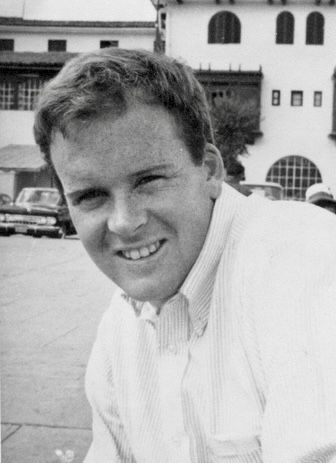
Before he became "Mr. Peace Corps" and spent forty-two years in public service, Sam was simply a 22-year-old searching for his place in the world.


His first attempt to join the Peace Corps ended before it began. After months of training in 1963, he was deselected. No explanation. No second chance.


Most people would have walked away. But Sam's mother, who was battling cancer, gave him advice that quietly changed the course of his life: "In America, you can always appeal a decision you don't like."


So he appealed. He studied Spanish, reapplied, and accepted an assignment to Medellín, Colombia.   She was right about the appeal. She was also right to send him—knowing it would likely be the last time they would see one another.


Like many new Peace Corps Volunteers, Sam arrived believing he had come to teach. Instead, he discovered he had come to learn. The people of his barrio became his teachers.


Together they built a soccer field on a lot strewn with boulders too large to move. But his neighbors had an idea: wrap the rocks in old inner tubes, burn them overnight, then cool them with water until they cracked apart. "Third World dynamite," as Sam calls it.


Then they built a one-room school, making adobe bricks one at a time with a hand-operated CINVA-RAM. Everyone helped—even the children, who loved pulling the heavy lever that compressed each brick. Sam secured the equipment and worked alongside his neighbors, but the community built the school.


It was designed for thirty students. On opening day, one hundred children arrived. They hadn't come because an American had built a school. They came because their community had.


That lesson stayed with Sam for the rest of his life. Community development wasn't something you did for people. It was something people did for themselves when someone listened, earned their trust, removed barriers, and believed in their ability to succeed.


The community's next challenge was sanitation. Residents agreed to dig the drainage ditches themselves if the city would provide the materials.  Sam connected barrio leaders with city officials. The people supplied the labor. The city supplied the infrastructure. Together, they made progress.


It was another lesson Sam would carry home: government works best not when it acts for people, but when it works with them.


"My goal," Sam says, "was to work myself out of a job."


Then tragedy struck.


While Sam was serving in Colombia, his mother lost her battle with cancer. Not long afterward, his father and younger sister, Nancy came to visit him. During that visit, she suffered a devastating fall from a horse and sustained a severe head injury.


In the United States, a neurosurgeon would likely have been minutes away. In Colombia, hours passed before a specialist could be located and flown in. Nancy died.


Years later, Sam reflected on what that experience taught him.


"Living in poverty, I always knew I could escape. As an American with a passport, I could leave. None of my neighbors had that option."


Then, when his sister died in a poor rural hospital, he understood something even deeper.


"I realized there is no escape from the effects of poverty. Only what-ifs."


He later recalled, "I said, you know what? This is what I'm doing. I'm going to work to make sure that no child, no family has to suffer the pain and agony that I had just suffered."


That promise became the compass for the rest of his life.
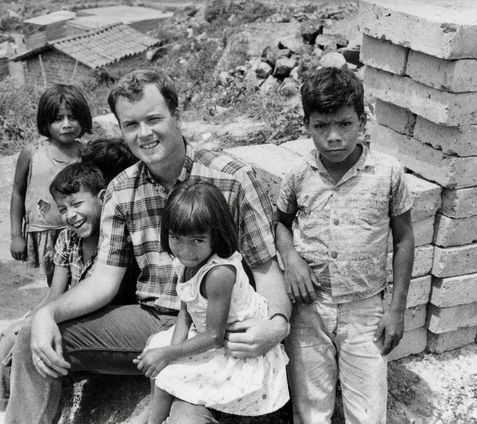
A black and white image shows Sam Farr with  a group of local children during his Peace Corps service in Colombia

The lessons of that Colombian barrio never left him: listen before leading, trust communities to shape their own future, help government become a partner rather than a patron, and measure success by whether people no longer need you.


Those lessons shaped forty-two years of public service—from local government to the California Legislature to twenty-four years in the United States Congress.


After returning home, Sam first trained new Peace Corps Volunteers bound for Colombia, then helped recruit Volunteers throughout the western United States and the South Pacific. The desire to share what Peace Corps had given him never left. Years later, when he was elected to Congress, Shary quietly observed, "You're still a Peace Corps Volunteer. You've just changed your barrio."


Whether expanding access to education, affordable healthcare, housing, or championing the Peace Corps itself, Sam carried Colombia with him.


In 2009, Sam introduced the legislation that made Peace Corps Park possible. Not because he believed the Park should celebrate any one person, but because he believed America should remember what the Peace Corps makes possible.


Peace Corps doesn't simply build schools or dig wells. At its best, it breaks down barriers—between cultures, between neighbors, and between citizens and their governments. Most importantly, it changes the people who serve.  They return home with new eyes, new convictions, and a deeper understanding of opportunity. The ripple effects of that transformation can last a lifetime. 


Sam Farr's life is one of those ripples.


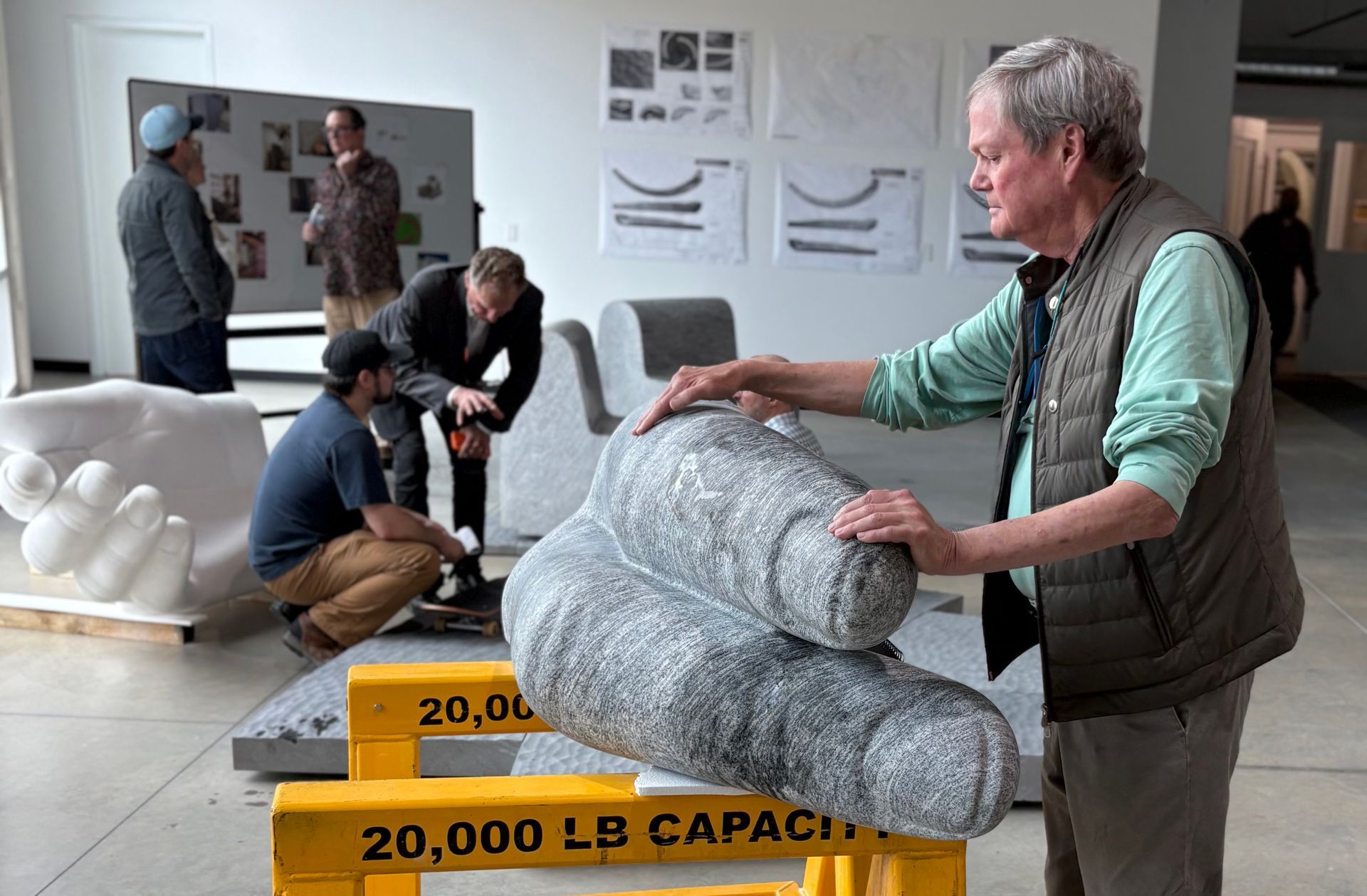
Peace Corps Park will honor thousands of Volunteers transformed by service. As part of the  Friends of Sam Farr campaign, we're raising $250,000 in his name to secure his place on the Park's donor recognition plaque, pending final approval from the National Park Service.


Please join us in honoring that legacy with a gift in Sam Farr's name – and in celebrating the enduring power of the Peace Corps to change not only communities abroad, but the people who return home to serve their own.

Yours in service,


An image of Glenn Blumhorst's handwritten signature

Glenn A. Blumhorst
Chief Advancement Officer
Peace Corps Commemorative Foundation


President and CEO, National Peace Corps Association (2013-22)
Returned Peace Corps Volunteer, Guatemala (1988-91)


GBlumhorst@PeaceCorpsCommemorative.org


DONATE

Campaign Progress


To date, this dedicated community has raised $8,491,214 of the $14,000,000 budget for Peace Corps Park and its digital companion, bringing us within $5.5 million of our goal.


The Friends of Sam Farr campaign, launched on Sam’s 85th birthday earlier this month, has so far raised $71,232 of the $250,000 target. To have your gift attributed to Sam, please include his name when you make your donation.


We gratefully thank the following 107 supporters who have made new donations and/or pledges since July 14, 2026, contributing $100,056 to the construction of Peace Corps Park:


* Indicates new gift in addition to previous contributions

Explore the full list of donors here


$30,000 - $49,999

Daniel Duff*


$10,000 - $19,999

Stanley Mazaroff
Jensy Patterson Richards*


$5,000 - $9,999

Barbara S. Benson
Ellen Cohen*
Alicia Falsetto*
Samuel Johnson*


$1,000 - $4,999

Chris Brown
Ed Demerly*
Charles Frankel
Friends of Sierra Leone
Matthew Gerhardt*
Arthur Levi
Joan A. Lim*
Bruce Moen*
Daniel Ritchie
Ken Weaver*


Other gifts to $999

Anonymous*

Karen Ackerman
Bill Anelli
Conner Bailey
Vicky Barrette*
Harold Beebout 
Marc Bosch*
Harvey Botzman*
Helen Burke
Bruce Burnam
Jacqueline Butler-Diaz*
Marco Cavallaro
Kathy Cox
Brian Crawford
Michael Davidson
Debbie DeVoe
Marna Dixit
Dick Drobnick*
Leonard Edwards
David Edwards*
Jerome Federlein*
Walt Ford
Francis & Chris Gaebler*
Howie Goldberg
Don I. Gray*
Elizabeth Grob
Jeannette Hogan
William Hollerman*
Henry Homeyer*
Larry Howe
Ronald G. Ison
Thalia Johnson
Anna Khandros
Philip Lamson
Jeff Layman
Rok Locksley 
Eva M. LordPearson
Ralph Lueck

John Macgregor
Stephen Mandel

Guy Toby Marion

Macon McCrossen*

Annmarie McParland

Philip Murphy

Susan Osborne

William Rhodes*

Justine Sass

Robin Sawyer

James Severe

Victor S. Sloan

Karen Steele

Sandra Storey

James Swank*

Joan Swetz

Karen Unger
 Dale Weitekamp*

Simon Wentzell

Danielle Williams

Mary Wright


PEACE CORPS PARK SUSTAINERS

(Contributions from monthly recurring donors)


Jane Bardon
Linda Barnett
Matthew Baysden
Rick and Karline Bird
Barbara Brosh
Greg Emerson
Jennifer Erie
JP Feighery
Elizabeth Ford
G David Hicks
Elisabeth Hinshaw-Osgood
Peter Hofman
Ann L. Hopkins
Fawn Jelinek
Marcy Kelley
Laura Kettel Khan
Linda Kolko
Ashley Leinweber
Roni Lerner Love
Deborah Manget
Judy Marcouiller
Richard Pyle
Shawn Reagan
Deidre M. Schilling
Robert Smythe
John Sommerhauser
Pete Stubben
Mary Lou Weathers
Kathleen Williams-Ging
Charles Wolf
Gail Yates

Connect with us on social media


Whether or not you’ve been able to support the project with a donation, an easy way to amplify your impact is to give us a boost on social media. Follow us and re-share our posts to help raise awareness in your network!


@PeaceCorpsPark on Instagram | @PeaceCorpsPark on Facebook | @PeaceCorpsPark on LinkedIn

DONATE

PeaceCorpsCommemorative.org


PEACE CORPS COMMEMORATIVE FOUNDATION

5636 Connecticut Avenue, NW Ste 42143
Washington, DC 20015


The Peace Corps Commemorative Foundation is the trade name of the Peace Corps Foundation,
a District of Columbia 501(c)(3) charitable organization.
EIN: 01-0554700

July 16, 2026
Building Peace Ep. 4: The Puzzle at the Heart of the Park
July 5, 2026
Introducing the Sam Farr Challenge: Help us get Sam Farr's name on the plaque
Sue with her 9th grade students at Haile Selassie Secondary School in Addis Ababa, Ethiopia
June 27, 2026
Sue Hoyt Aiken (Ethiopia 1962-64): I want this to be part of my legacy. What about you?
June 11, 2026
Building Peace Ep. 3: Maria Shriver, in her own words
May 28, 2026
Building Peace Ep. 2: Carved to Last, Letter by Letter
May 14, 2026
Building Peace Ep. 1: Partners in Stone
April 30, 2026
Building Peace Ep. 0: A Major Gift for a Milestone Moment
March 27, 2026
March Newsletter: 25 years ago, we too had a bold idea